Roasters and Grills – Heating Methods for Seafood and Seaweed
A roaster or grill is heating equipment that cooks seafood processing materials such as fish jerky, daruma, laver, and seaweed at a uniform temperature to enhance flavor and texture. Depending on the heating method, it is divided into roller, hot-plate, and rotary types, and the best option depends on the raw material and production volume.
What is a roaster?
Roasting is a processing method that slowly cooks raw materials with conduction and radiant heat, rather than direct flame, to control moisture and bring out aroma. When the surface temperature rises above about 140°C, amino acids and sugars react in the Maillard reaction, creating a savory aroma and appetizing brown color. The key to roasting is to draw out this reaction without burning the product.
Direct flame can cause local temperature spikes, leaving the outside burned while the inside is undercooked. By contrast, conduction and radiant heat transfer heat evenly, producing consistent color and texture. Whether squid and pollock are grilled into shredded seafood snacks and fish jerky, or laver and seaweed are grilled into seasoned laver and snacks, this even heating determines quality.
Industrial roasters continuously convey and cook raw materials over belts, rollers, or hot plates, so variation is smaller than in manual work. The more precisely conveying speed (residence time) and surface temperature are controlled together, the easier it is to achieve consistent color and texture without charring.
Features by type
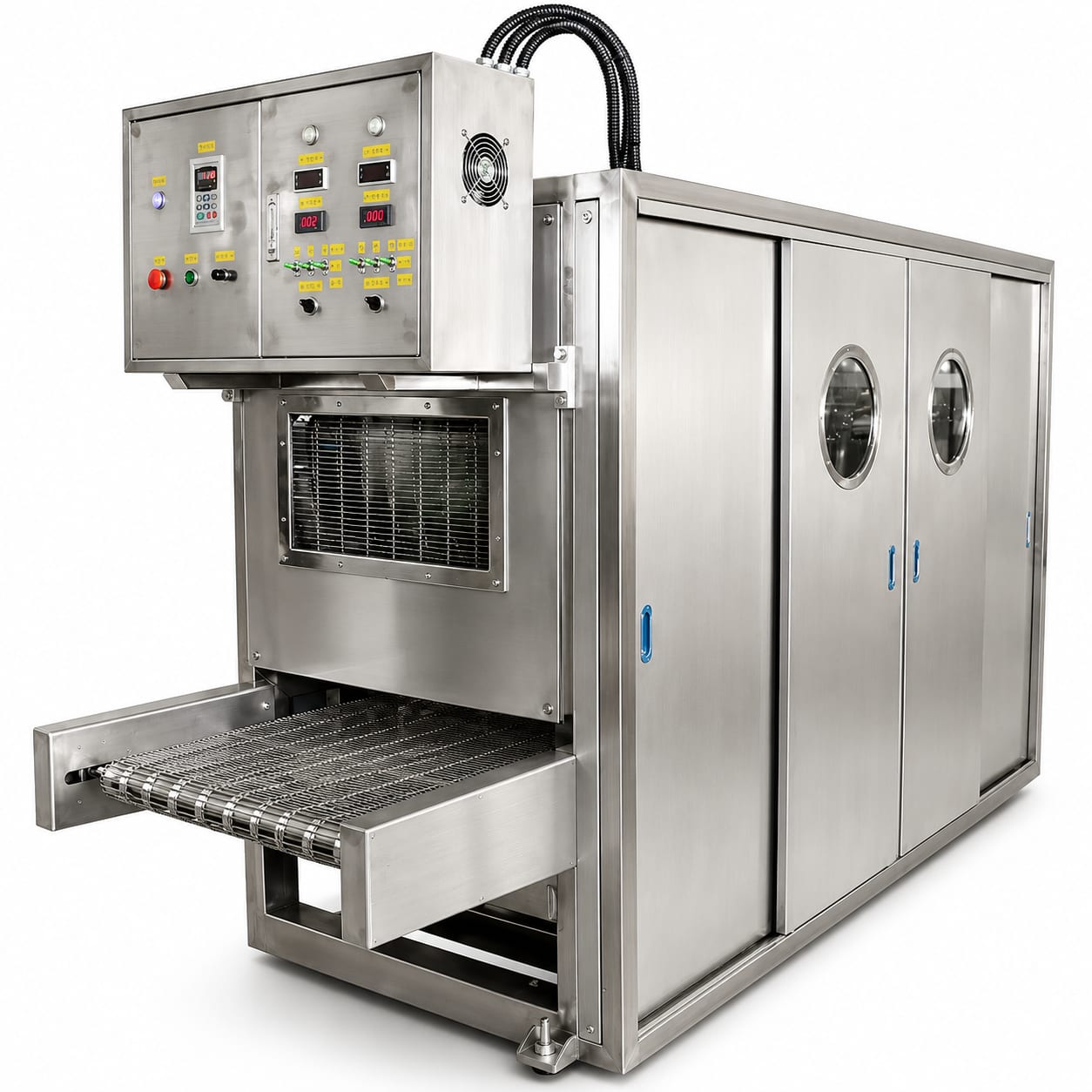
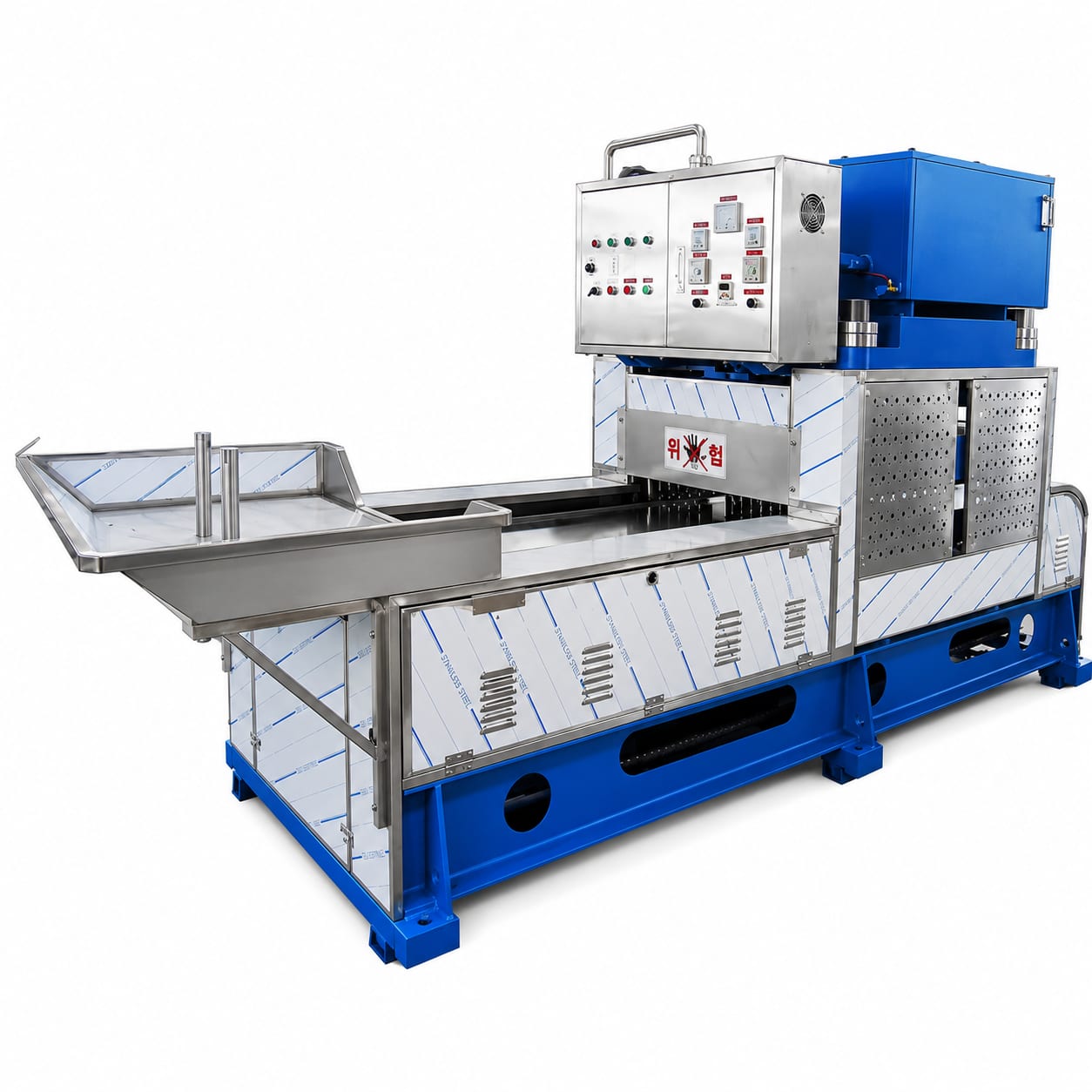
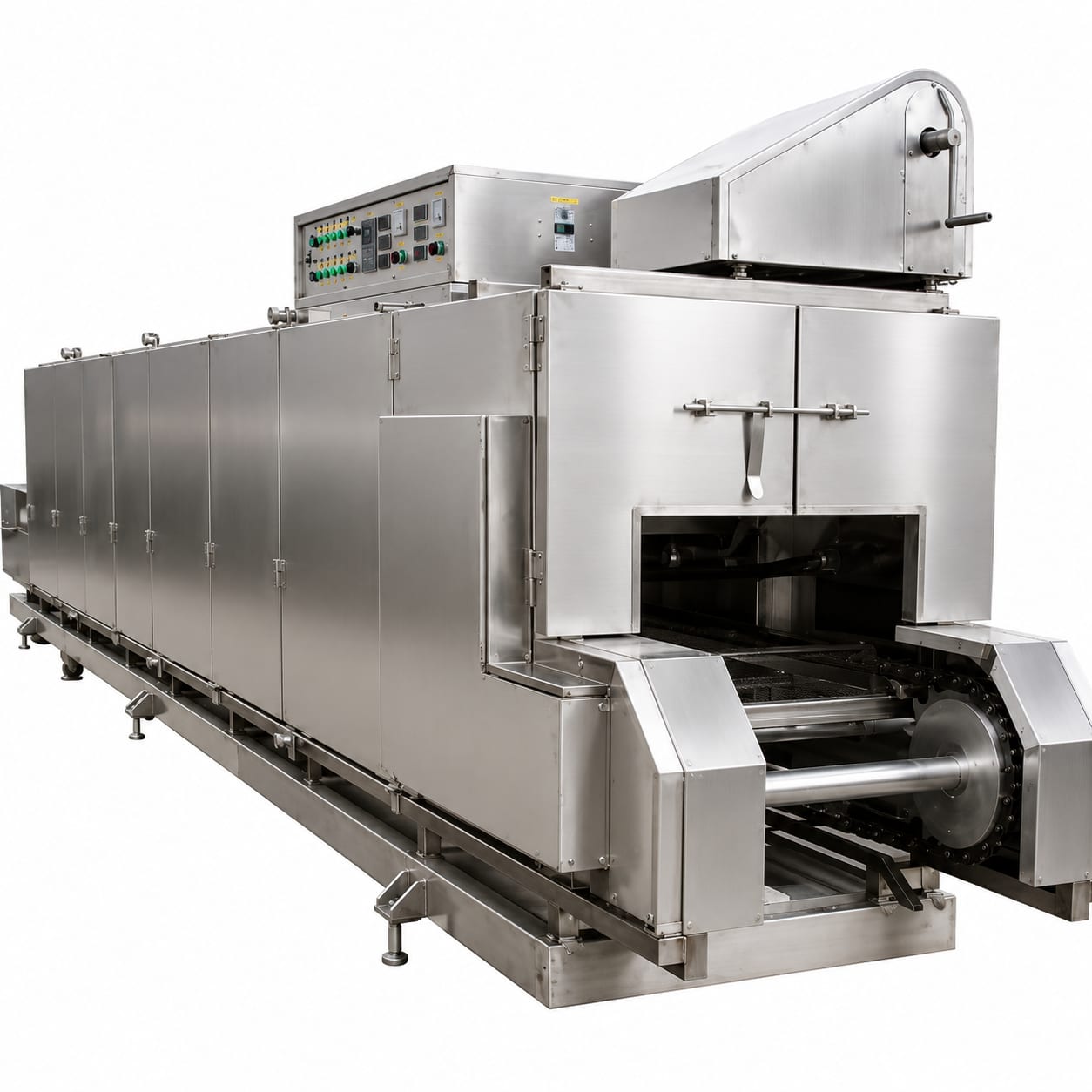
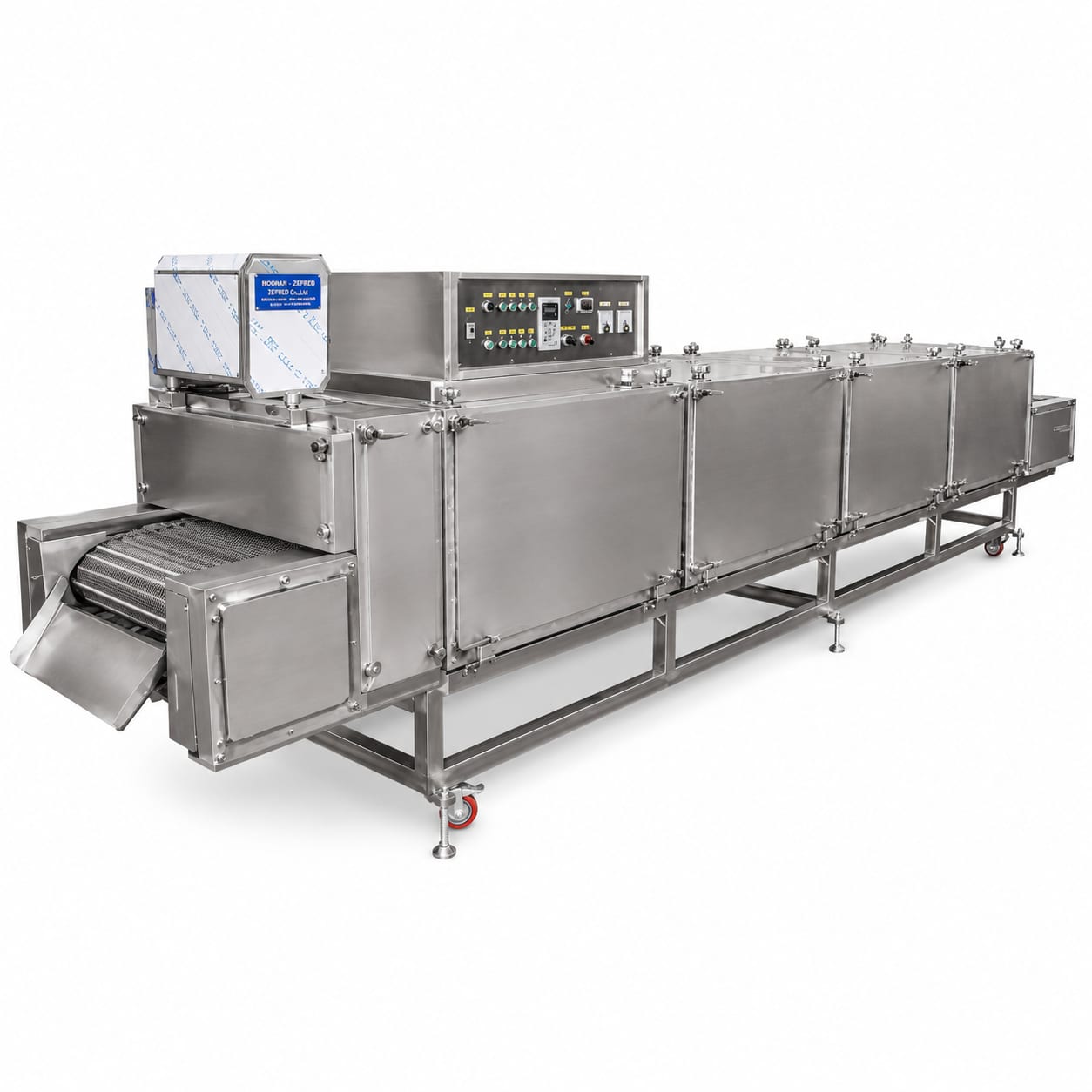
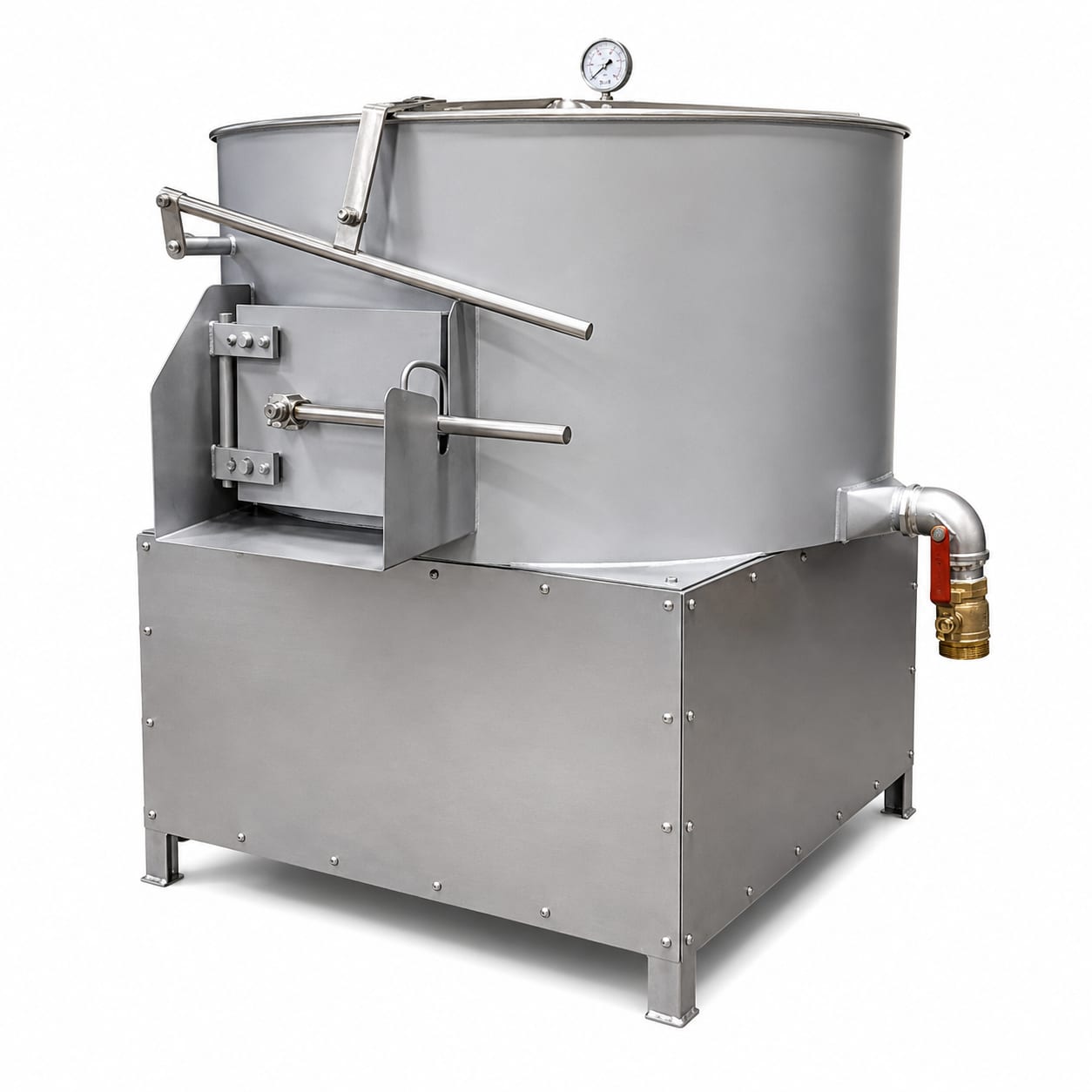
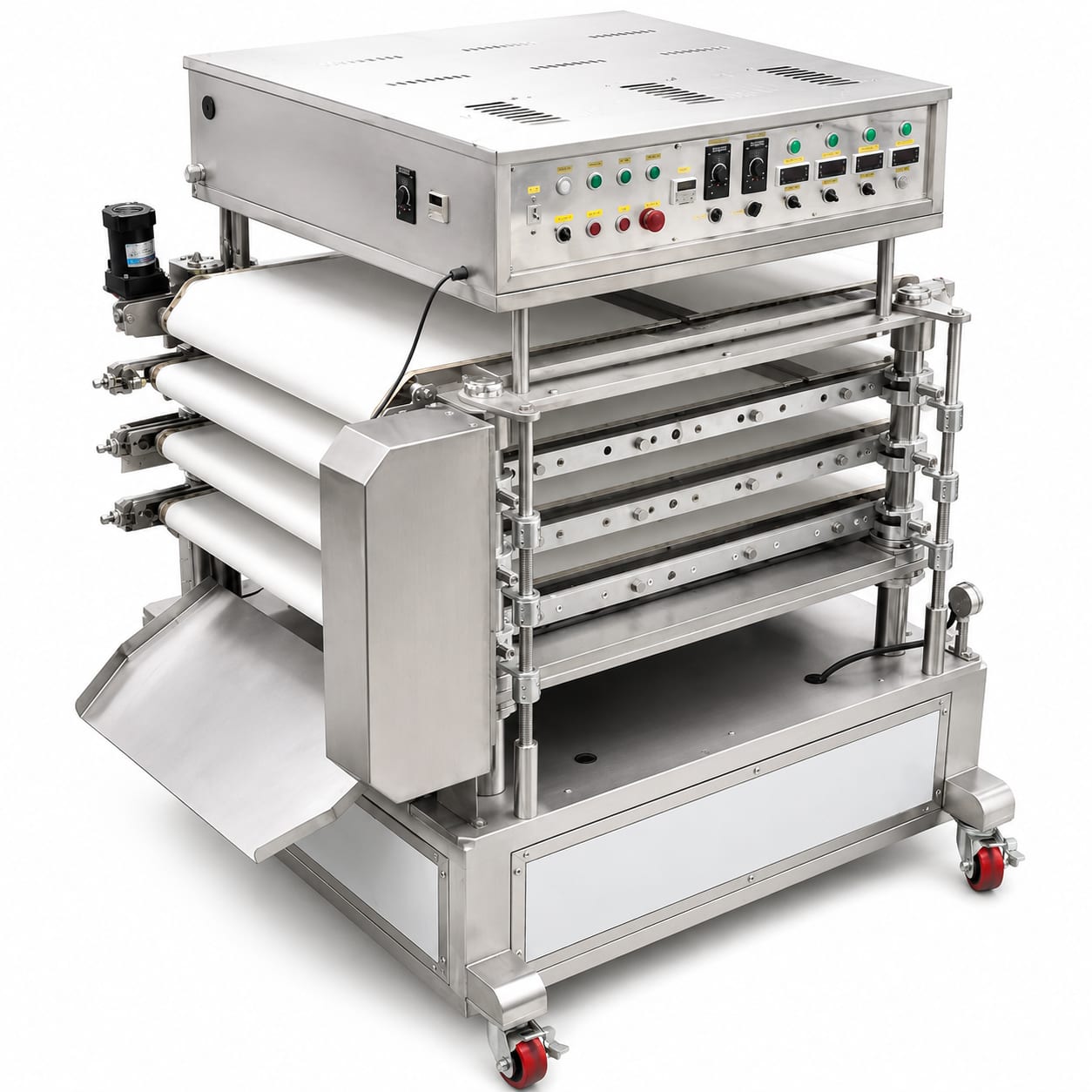
Roller types (Rolloster and hydraulic roasters) press raw materials with upper and lower heated rollers and grill them twice to enhance flavor, making them suitable for cooking daruma and fish jerky. Hot-plate types (wire-mesh and plate roasters) use a wide high-temperature surface to process large volumes evenly, giving them an advantage in mass grilling laver and dried seafood products.
Rotary types arrange multiple grilling plates in a circular layout to maximize output in a compact space, while automatic-discharge press types are suitable for products such as seaweed snacks that require pressing and grilling at the same time.
Selection criteria
Choose the type based on the raw material to be processed, such as fish jerky, laver, daruma, or meat products; hourly production volume; installation space; and the precision of temperature and speed control. Rotary and roller types are advantageous for small-batch production of multiple products, while hot-plate and conveyor types are better for high-volume production of a single item.
Jepid roasting lines include Rolloster and hydraulic roasters that grill twice with upper and lower rollers, hot-plate roasters with a wide high-temperature surface, and rotary grills that are efficient in limited spaces.
Related Terms
- roaster
- grill
- roller roaster
- hot-plate roaster
- rotary grill
- fish jerky grill
- daruma grill
- laver roaster
- seaweed grilling equipment
- continuous roasting line
Products
Related Products
These are Jepid products in this equipment category. Select a card to view detailed specifications and standards.